Collections
Every plate comes from one of these books. Choose a spine to see how it survived.
AUGUSTE RENOIR
This one came from a villa just off one of District 1’s old tree-lined streets, the kind of house that would have belonged, before 1975, to a family with connections to the former colonial administration. By the time I found it, the house had been subdivided into three or four households, and the book had been quietly kept by whichever family had ended up with the back room. Nobody was entirely sure any more whose it had originally been, only that it had always been there, and that it seemed wrong to throw it out.
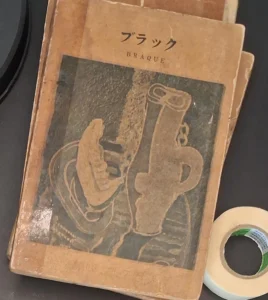
BRAQUE
I found this one through the same xe ôm network, a few months after the first collection. District 4 in those years was still a working docklands neighbourhood: river trade, warehouses, narrow lanes running down to the water, not the kind of place you’d expect a European art book to have survived at all. It had belonged to a family who’d worked for a French shipping concern before 1975, and it had spent the decades since wrapped in oilcloth at the back of a storage loft above a boat-repair yard, kept dry more by luck than design. The dust, when I unwrapped it, smelled like the river.
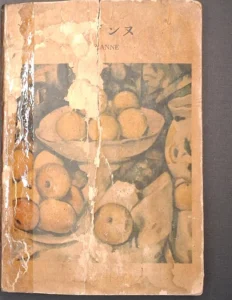
CÉZANNE
Kodansha Art Books, Tokyo · First printing April 15, 1955 · 17 plates
In 1955, a Japanese publisher did something quietly remarkable.
Kodansha — one of Tokyo’s great publishing houses, based in Bunkyo-ku — released this volume as part of their Art Books series, printed by Kyodo Printing Co. Ltd. It was priced at 150 yen. A modest price for an immodest ambition: to bring Paul Cézanne — the father of modern art, the bridge between Impressionism and everything that followed — to Japanese readers in the decade after the war.
Japan in 1955 was rebuilding. That a publisher chose this moment to produce a serious Cézanne volume — carefully edited, beautifully printed — says something about what people reach for when the world has been broken and needs to be remade.
I found this book in Saigon. A Japanese art book in a Vietnamese collection — testament to how far books travel, and how stubbornly they survive. It had crossed the Pacific, reached Southeast Asia, outlasted a revolution, and waited.
Cézanne spent his life being misunderstood and painting anyway. Mont Sainte-Victoire, again and again. The bathers. The card players. The apples. He believed that underneath everything visible, there was structure — something permanent beneath the surface of things.
These 17 plates are what this book gave us. Small in number. Enormous in weight. Each one original, removed from the only copy we will ever have. Mounted, stamped, framed. One only. Never again.
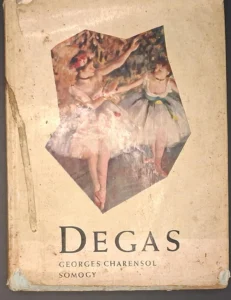
DEGAS
Aimery Somogy Éditions, Paris · Printed in Germany, 1958 · 36 plates
Paris conceived it. Germany printed it. Vietnam kept it.
Published in 1958 by Aimery Somogy Éditions in Paris — one of France’s most distinguished art publishers — this edition of Degas was designed by Jeannine Thibault and printed by Carl Schünemann in Bremen on paper sourced from the Alamigeon Frères Fils and Lacroix mills. It was a serious object made by serious people who cared deeply about how art reproductions should look and feel.
Reproduction rights were held by S.P.A.D.E.M. — the French society that protected artists’ estates. Every plate in this book was authorised, considered, and crafted.
How it arrived in Vietnam, I cannot say with certainty. What I know is where I found it — in Saigon, decades after it should have been destroyed. It had survived the years between 1975 and the opening of the country with quiet determination, the way beautiful things sometimes do when someone loves them enough to hide them.
Edgar Degas spent his life capturing the ephemeral — dancers mid-movement, women at their toilette, racehorses in morning light. There is an irony in the fact that this record of his fleeting moments has itself become a survivor. These 36 plates are what remain. Each one original. Each one unrepeatable.
One plate. One collector’s stamp. One story. Yours.
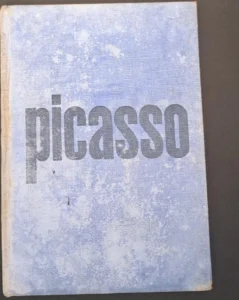
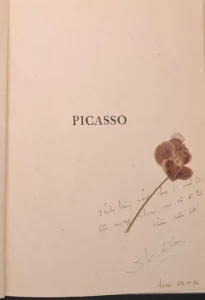
PICASSO
District 5 is Chợ Lớn, Ho Chi Minh City’s old trading quarter, and even in 2006 it still felt like a different city inside the city: its own rhythm, its own history, layers of trade and migration going back generations. This book came from a family whose household had, before 1975, done business with a French export house. It had survived in a chest under a staircase, wrapped in newspaper that had long since yellowed and fused to the cover. The smell of the room when I opened that chest is still the clearest memory I have of finding it.
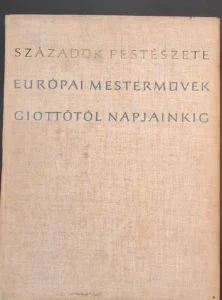
SZÁZADOK FESTÉSZETE
Hungarian Fine Arts Fund, Budapest · Printed in Germany, 1961 · 120 plates
Some books survive by accident. This one survived by intent.
Published in 1961 by the Hungarian Fine Arts Fund in Budapest, Századok Festészete — Centuries of Painting — was an ambitious act of cultural defiance. Printed in East Germany by VEB E.A. Seemann of Leipzig, one of Europe’s most respected art publishers, it brought the great European masters — Velázquez, Rembrandt, Monet, Goya — to readers living behind the Iron Curtain. It was a book that believed beauty had no ideology.
Copies travelled. Some reached Saigon before 1975, carried by collectors, diplomats, and book lovers who understood that art books were more than decoration — they were evidence that the world beyond the wire was still painting, still dreaming, still alive.
When Saigon fell, books like this were marked for destruction. This copy was not destroyed. It was hidden. For decades it waited — in a home, in a collection, behind other things — until it could be found again.
I found this book in Saigon in the early years of collecting. It was not in perfect condition. The spine was worn. Some pages showed the humidity of decades in hiding. But the plates — all 120 of them — were intact. Each one a window into a century of European painting, printed with extraordinary care in Leipzig in 1961, carried across the world, hidden, and now here.
Each plate from this collection is presented as a single original page. Removed with care. Mounted, stamped, and framed. One only. Never again.
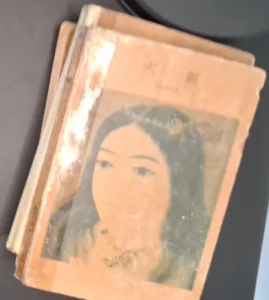
TAIKAN
District 10 in the mid-2000s was quieter than the districts around it: mostly residential, market stalls, motorbike repair shops, not much foot traffic from outside the neighbourhood. This book turned up in a house that had, before 1975, belonged to a family with trading ties to Japan. It had sat on a high shelf for over thirty years, moved from room to room as the house changed hands within the family, never once mentioned to anyone outside it until an xe ôm driver, who’d grown up two doors down, suggested I ask.